
Confusion
re-edited essay (and last before a little break)

CONFUSION
“You see the concordance of Indian, Greek, and German metaphysics; the world is maya, is illusion, says Sankara; is a world of shadows, not of realities, says Plato; it is appearance only, not the thing in itself, says Kant. Here we have the same doctrine in three different parts of the world”- Paul Deussen, The Elements of Metaphysics
In very broad terms, Indo-European spirituality and philosophy, from pre- (or para) conversion Ireland to India had/has common themes. A prominent one is the emphasis on dream and illusion, as both metaphor and actual phenomenon. Dreaming is linked to creation; the cosmic dream of the divine intellect, the dreamlike manifestations of the gods, the revelatory dreaming of the poet or seer. Illusion, as a consequence of the nature of creation, is seen as an enabling constraint; it allows the created beings to believe they are really separate and independent entities, enabling the great drama of cosmic life, while also acting as the source of suffering and as an obstacle to be overcome.
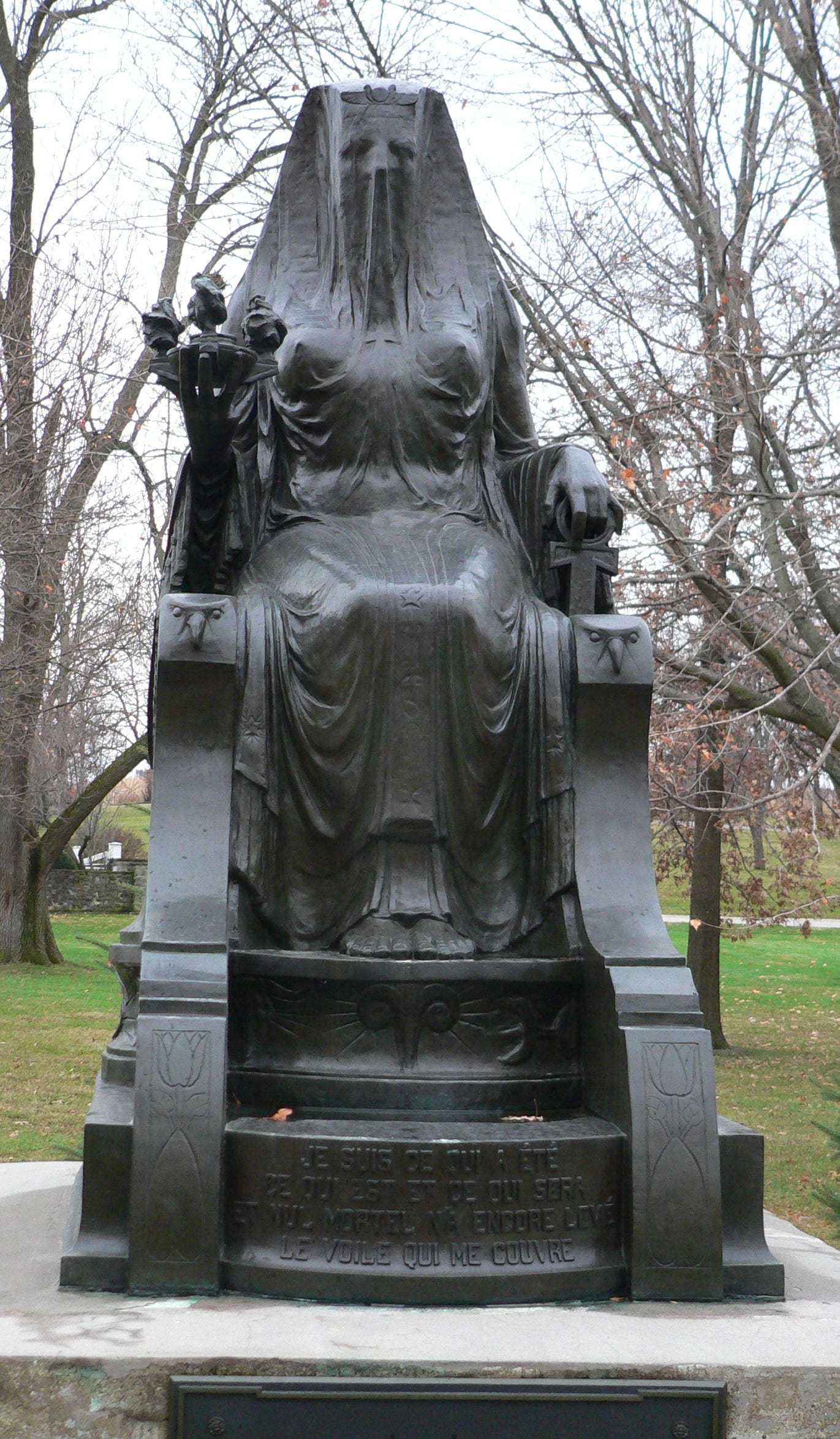
This latter form of illusion can be thought of as a layered tissue of confusion, where what is ultimately real is obscured by a series of visors, both sensible and mental, physical and psychical.
Bringing it to a very base, but very relevant level, we have an idea of the kind of “useful” illusion/confusion to which the populations of modern societies are subjected by the rulers- in our case, the corporate oligarchy, the financial elite, and the super rich globalists (and, of course, their pet governments and captured institutions). At some point, it is hoped (by many, including myself) that at least the outer layer of fabricated illusion that goads people to waste their energy on petty grievances, some of which don’t even have relative reality to them, but which are used to keep us biting at each other, will be well and truly seen for the distraction it is. In other words, it is hoped that people will stop taking the bait in the really debased and degrading tabloid, or social media generated culture wars. Leave people alone with regards to what they are or want to be. That’s what being an adult used to be about.
A more elevated, but no less malign and misleading recent project (from what source I can’t be sure, but I suspect it has powerful financial and tech-money interests behind it) is to present western science as owing it’s origins to a “Judaeo-Christian” cultural heritage. This stance is patently biased, but also just bad history. That the luminaries of the early modern scientific revolution were Christians, or Jews, or Muslims, is not a controversial. However, to cut tradition off at that point is arbitrary in the extreme. European intellectual life owed and owes as much, if not more, to inheritance from Classical Greek science, philosophy, and theology as it does to the Abrahamic religions. And the former is precisely it’s own heritage, as opposed to that of the Semitic peoples. It is a fact that Thales, Pythagoras, Anaxagoras, Democritus, Plato, Aristotle etc and their successors stand with far more justification as figures of importance to western science than the Hebrew prophets or the apostles. And the ancient Greeks mentioned were certainly not “Judaeo-Christian”.
However it may be that Aristotle’s philosophy became, through appropriation and reinvention by medieval religious institutions and thinkers in West Asia, Europe, and North Africa, more or less orthodoxy for a few centuries is not the subject of this essay. Martin Heidegger had interesting things to say on that matter. But, taking it that Aristotelianism/Thomism was the prior mainstream of the intellectual milieu from whence sprung the scientific revolution, what does Aristotle, or, at that, modern science reveal of the world? Not for one moment doubting the immense value of science, we can still say that it reveals, at most, one side of things; the phenomenal mode of existence, the world that appears to consciousness, in consciousness. One side.
Of Aristotle, Arthur Schopenhauer caustically, but with some justification, wrote; “His view of the world is shallow, even if ingeniously elaborated. Depth of thought finds it’s material within ourselves; sagacity has to receive it from outside in order to have data. However, in those times the empirical data were in part scanty and in part even false. Therefore the study of Aristotle is nowadays not very rewarding, while that of Plato remains so to the highest degree”- Parerga and Paralipomena
Aristotle, and before him, Democritus, as well as other atomists and materialists, and down to our own day, the scientists and physicalists- all are concerned with and involved in the world as phenomenon, as object. And as Schopenhauer stated “materialism is the philosophy of the subject who forgets to take account of himself”. In other words, in every conscious experience, or view of the world, or scientific investigation, there is always a precondition that is seldom acknowledged, even now; that everything objective depends on there being a subjective consciousness to which it is objective and is conditioned as such.
And beyond this primary condition, namely, of being viewed as object, from the outside as it were, the world is further engineered by the forms of perception of consciousness, the shaping paradigms inherent in our mind which for Schopenhauer and others were space/position, time/sequence and causality. In any event, such a prioi structuring principles must certainly be present, even if others, or ones with different functions are make up the set. (Eduard Von Hartmann for instance, disagreed with Schopenhauer about the exclusively apriori nature of space in consciousness)
To go back to the opening quotation, the objective world of Aristotelianism/Thomism, of atomism/materialism, of physicalism, of science and of common perception is so limited to being just one side. Therefore, in contrast to absolute reality, or unconditioned Being-in-itself, it is illusion, shadow, and appearance only. Even the most immediate phenomena arising from the senses into perception are such.
For instance;
The solidity of things sensed in the sense of touch, the assumed touchstone by which we discriminate the ‘real’ waking world from the ‘illusory’ realm of dream is, in the final analysis, no more or less a shade of phenomenal existence (that is, of only one half at most of being) than everything else, including the cities and palaces and whatever other strange and bizarre appearances are encountered in dreaming life.
Indeed, the supposed priority of the waking world, or the world revealed to the senses in waking consciousness is a relative priority (quite apart from the fact that ‘priority’ by it’s very nature is a relative term). Relative, in the sense that when one is awake and not asleep, then the phenomena of the waking world are of primary importance to the self and with these phenomena, is the equally phenomenal self entangled for it’s preservation, according to the will to live. When one sleeps, a different though fundamentally not separate set of conditions and their phenomena take precedence.
As is taught in the Vedic Catapatha-brahmanam
“When a man sleeps, speech is merged in life, eye in life, mind in life, ear in life. And when he awakes they are reborn from life”-
‘life’ is more than the career of any ego.
The very nature of existence as it appears within any consciousness is maya, illusion. Appearance itself is illusion insofar as anything objective presupposes a subject which does not appear, but which, according to whatever conditions filter it’s perception, perceives only what it is open to. Therefore, appearance is not unconditioned reality. In this sense, everything that one can be conscious of is an illusion, is “pure maya”
“Impure maya” on the other hand, is produced when what is fundamentally illusion is taken as real, in other words, impure maya is delusion. This world which we take as real, which we suffer in, which we ache, and grind, and serve, and chaff in, and in which we are beset by grief, and frustration, and despair, and all of these incredibly painful experiences that we have been told to believe are ‘just what life is’ is, from the view of what is not immanent but transcendent knowledge, a delusion pressed onto illusion.
Though that may (does) sound so absurd as to be offensive to suffering as to be despised, that does not invalidate it. But it must be properly understood. To point for instance, to the hellish suffering being inflicted on the people of Palestine, and to say “it’s an illusion” would be grotesque. Suffering is real. As long as there is life, there is suffering. But some suffering is the direct, if only relative, result of wickedness, and cruelty, and all we call evil. There is relative good and evil as long as there is relative existence.
To say that all is ultimately a dreamlike illusion is not to fall into a selfish solipsism. It is not a dream of any one of us, not of any ego (not even a god’s ‘ego’) but is rather the inherent nature of conditioned existence, of maya, by which the one Real Being objectifies, and thus experiences itself. It is a creative play, but one laced with suffering, a dream and nightmare. It is the cosmos as a reflection of the Self. That is Atma and Maya, the Will and Representation, the real and it's shadow.
Greetings Ross, have a rich and ripe sabbatical and stay safe. Love Peace and Poetry, Geraldine
Excellent essay! Thank you Mr C, I would list this as required reading.
Yes, the unshakable belief in the prominence and tyranny of material existence derives only from the fact that we must leave it. For all of our assumptions regarding 'What Is' require the void.
I can't help but find the interplay between that which is obvious being made so by qualities that cannot be measured to be a kind of cosmic joke.
Its bizarre, yet true that there are different worlds, and in traversing them all the others become suppositions, theories. So, in this one, the mass murder of Palestinians carries with it a defining moment for the abrahamic rulership of this world. They reveal themselves for anyone who might have the faculties to perceive them. The suffering, the inhumanity, the bestial savagery that arrives with the donning of blinders necessary to adopt all the shallow justifications actually makes a mockery of abrahamic claims, lays bare as it were, their ignorance and deceit.
The reality of different worlds does not change the reality of this condition. Rather, the larger perspective creates if anything a deeper sadness, that such genocides bulldoze the understanding of the preciousness and uniqueness of this place, intentionally rejecting the gifts and wonder for something decidedly lesser, something stupid and small that will prove itself to be both painful and ultimately fleeting.