
The Rays
essay and verse

THE RAYS
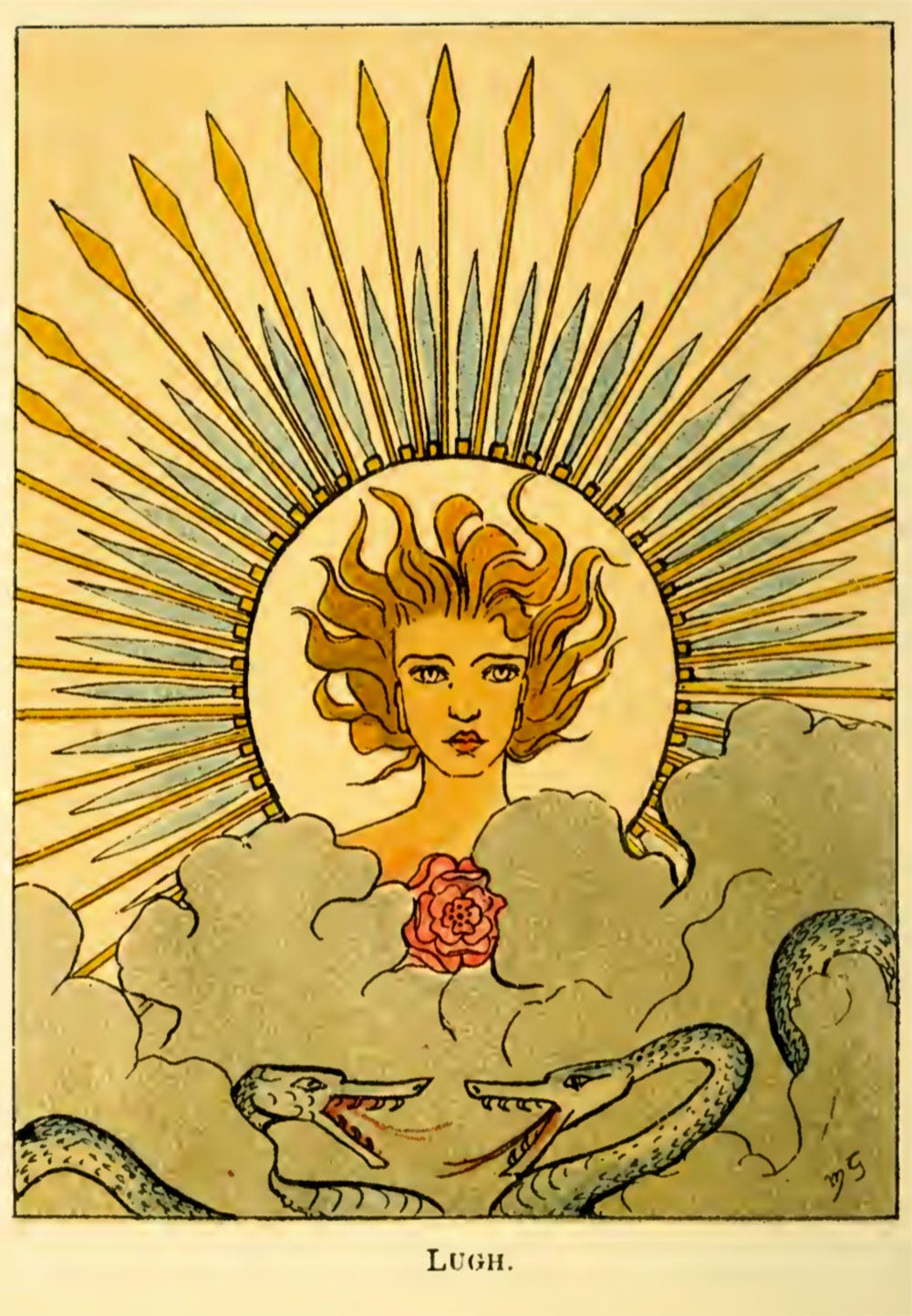
There is, or was, an old superstition among the rural folk of county Suffolk (and probably elsewhere) that tells how the rays of the setting sun will brand haunted or cursed landmarks by daubing them in the deep reddish glow of its fire. Little hillocks, copses, lonely streams or even certain houses, barns and outbuildings, if they show up in particularly violent flare are considered sinister, or at least suspect.
Spending a bit of time in waiting rooms of late, I’ve been reading whatever little books I manage to stuff into my coat pockets. One in particular has been warding off anxiety and boredom- “The Roots of Platonism” by John Dillon, a fellow Irishman and noted Platonist scholar (Platonism seems to have been a branch of Indo-European wisdom enthusiastically embraced by the Irish historically, perhaps because of its mystical orientation).
As early as the scholararchs Xenocrates and Polemon of Plato’s Academy says Dillon, philosophers of this school conceived of a divine intellect, active and permeating the cosmos, arranging all things which appear as the world and ourselves. This development came from a metaphorical exegesis of the “Timaeus” dialogue and the myth of the demiurge, no doubt “stimulated by both the theorising and the gibes of Aristotle”1. This Divine Mind, or Nous, is called Zeus, but the name of any supreme deity fits; Jove, Odin, Brahma, Yahweh, Atum,.... and so, for a Gaelic slant, the Dagda. It projects the content of it’s (or his) thoughts, the Ideas, into the indefinite or formless principle (conceived as a female divinity, the mother of the gods) and thus this flux of appearances we call the world, or universe, has it’s origin and support.
For later Platonists and certain Aristotelians, notably Alexander of Aphrodesias, this Divine Mind, or Active Intellect, illuminates our own individual minds, allowing us to perceive universals (for the Platonists, our individual souls already contain knowledge of the realm of Ideas, the contents of the Divine Mind, and we remain intimately linked to this cosmic intellect as it is part of the cosmic soul, all being emanations of the One). Its action on our minds is compared to the rays of the sun, which light opens up the world and our eyes, and thus our vision.
Somewhere between these two – the Suffolk superstition and the Nous of Plato and Aristotle – is the evening sunlight out my window, bathing dear old Dublin in it’s russet flame. It points as it paints to the places which I know to be part of my soul, whatever it’s status or scope relative to the whole, or within the Absolute.
THE RAYS
Upon Claude hall, this hair and bone,
and Wigan road, this trickle red,
so fondly all aflare as home;
this land, the living,
and the dead
Dillon, John, “The Roots of Platonism, The Origins and Chief Features of a Philosophical Tradition” Cambridge University Press
Yes, the complexity of memory, and the difficulty in determining what the memory is providing communication with. Are we communing with the flow of emanation? Are we communing with intelligence seeded in creation? Because the land. Because the sea. Because we perceive.
This morning I was sitting at my desk and thinking about how every morning, just for a few moments as the sun rises, the sun bathes my desk and books in sunlight and it is absolutely my favorite part of the morning. Even beyond my coffee I love to be there at that moment when it feels like the world is personally telling me good morning and it's time to start the day. Thank you so much for sharing this!