
Looking Will
essay

“unfortunately, idea and concept are blurred in his Ideas. That he has in mind concepts is proved by the majority of examples in his work (the Good, the True, the Beautiful, Identity, Difference, Justice, State, Virtue, etc.), which are only concepts, and also by the fact he calls the science of Ideas Dialectics and celebrates it on an effusive manner. But that Plato’s Ideas, according to their original purport, are the creative natural forces is proven especially by the word Idea itself, which signifies a visible form and nothing abstract, and by the fact that he describes the Ideas in the Phaedo as causes, in the Sophist as living forces...”1
In the above passage, German Schopenhauerean philosopher and Indologist, Paul Deussen makes the claim that the famous doctrine of the Ideas, one of if not the most important feature of Plato’s work was treated ambiguously to the point of confusion by the master himself. “Eidos” means a look, in the sense of “the look of something”. For Plato, anything that appears is derived as an imperfect copy or projection (eidolon) of a transcendent original, or ectype (eidos /Idea). While previous philosophers such a Parmenides, Heraclitus, and especially Anaxagoras were more concerned with the fundamental ontological constitution of reality perceived in the forms of nature, Plato (and in another work, Deussen specifically cites Socrates as the probable source of the confusion) attempted to bring ethical concepts to a similar universal standing, thus conflating – or at least not clearly distinguishing – the domains; the natural with it’s forms or “Ideas” and the ethical with it’s concepts. Had he done so, the doctrine of the Ideas, freed from entanglement with “concepts” would not have caused such controversies as the strife between Nominalism and Realism in the Middle Ages.
The forms of nature, or rather, the shaping and creative forces of nature, were known widely across the Indo-European cultural area in relation to the gods, including those of mythology. These mythologies were not fictions; the gods could reveal themselves to seers and poets to the same or similar degrees of credence by the population as that elicited by the oracles, the Egyptian priests, the Semitic prophets, and the Chinese augurs in their ‘revelations’. Indeed the Rg Veda as a body of hymnic poems was regarded as Sruti, as revelation, as opposed to Smriti, or tradition/convention.
However, gods were not merely forms or “looks”, but those that looked themselves. Theoi (which shares the same root as both “theatre” and “theory”) peered back at man as he gazed on their workings in the eidola of nature. They were the guides and sign givers, not the commanders of mankind. At the pinnacle of the divine hierarchy was a great lord, a Zeus, or Odin or Dagda or Indra who could (certainly in the case of Zeus) be of vastly greater power, even transcending the lesser gods in terms of order of being. Sometimes the absolute principle was given the name of the highest god such as Heraclitean or Stoic Zeus or Vedic Brahma, the creator. They were immanent in the world, yet also transcended our ordinary experience of it. The original enterprise of philosophy, far from denying these divine aspects of existence as is often read backwards into it by modern philosophers of a more or less physicalist persuasion, was rather a maturing appreciation, a deepening of engagement with such an existence and a de-trivialisation by the riddance of unquestioned belief and superstition.
For Arthur Schopenhauer and Paul Deussen, the Ideas of Plato represent what is apparent of the world, the objective manifestation of the Will, that which we experienced a subjectively as the directing inner power of our actions, both conscious and unconscious, but without the further conditions of time, space and causality which are the filters through which the world is perceived and which are innate functions of our minds.
Although nigh on impossible to imagine, the Ideas are the forms of nature which reach into our perception, but as non-spatial, non-temporal, and causality free (ubiquitous, eternal, unchangeable). The gods are here, present, all pervading and yet because of our innate human conditions for experience, they are beyond our direct perception. However Schopenhauer and Deussen found in Kantian philosophy a key to the inner realisation of the supreme reality, of which the Ideas are only the adequate objectivation. This mystical via negativa was realised in ancient times by the authors of the Upanishads as well as among some their western Indo-European cousins, but had been neglected in favour of Aristotelian discursive thinking in the Middle Ages. It is the realisation of the ultimate identity of the relative and the absolute, of the one and the many, of the conditioned and the unconditioned, of the manifest and unmanifest, of the phenomenon and the thing-in-itself.
LOOKING WILL
“But if at last a way be found
to bring the cranes of Midir still,
from time, and space, and cause unbound ,
they rid, remains there looking Will”
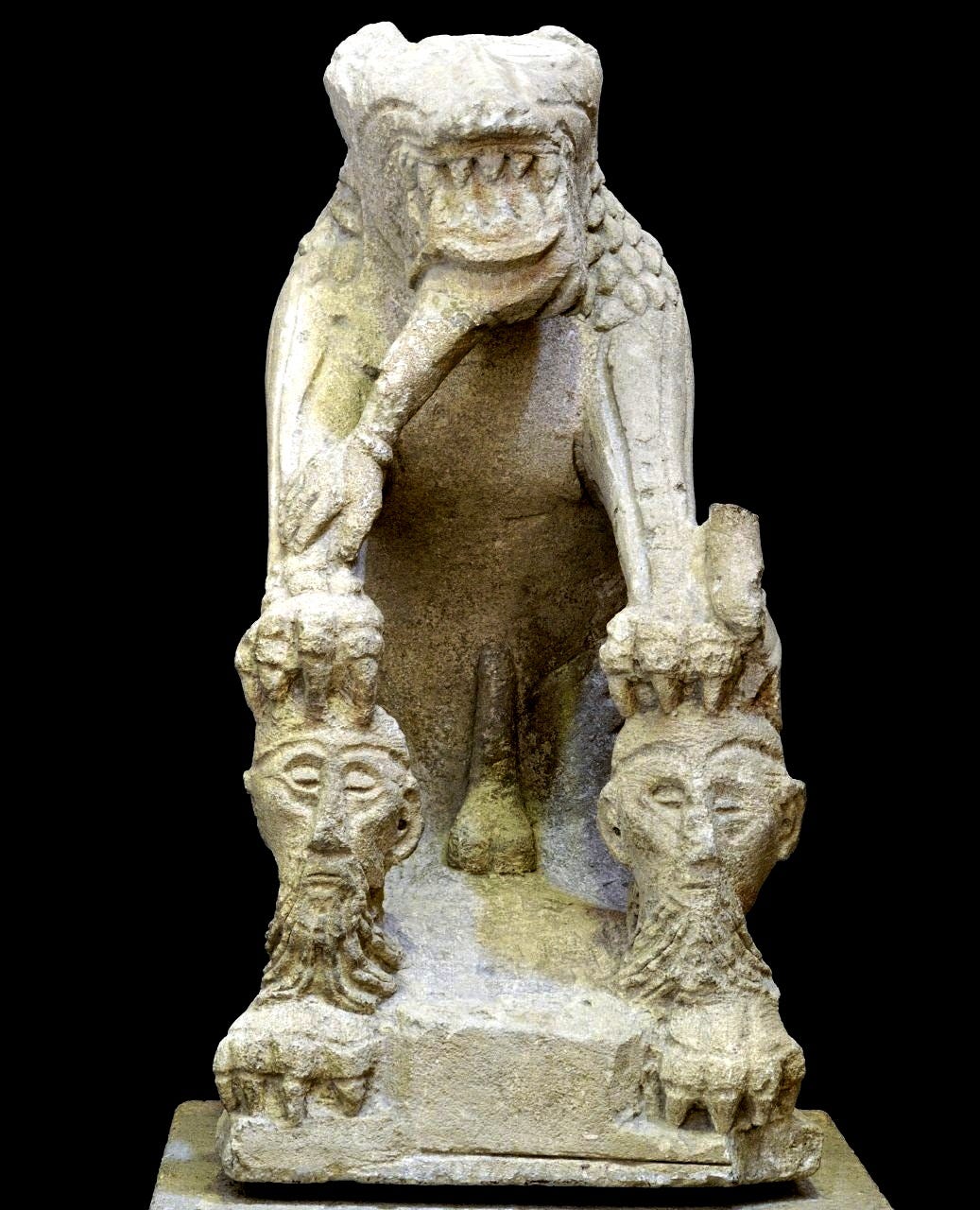
Paul Deussen “Vedanta, Plato, and Kant”
Medaevel philosophers created the confusion of Plato through their own insistence on an idea being "visible", and a concept "abstract". Thus they could run from Plato, and to Aristotle, clutching onto their " idea of god".
Such gymnastics are to be expected, as even Aquinas was forced to admit there was no way to prove the existence of the Abrahamic god.
In truth there is nothing visible in an idea, and attempting to force an idea into a direct correspondence with incarnate reality revisits all the unworkable assumptions Plato attempted to address.
The value of Plato to an incarnate condition is to open a very specific experience to alternative perspectives. These perspectives associate directly with what we might call the spiritual reality, which works according to very different principles than a self deluding "idea of god".
I think, Mr C, you illustrate this both directly and masterfully.
Thank you.
Another gem! 💜💜💜💜😊😊😊😊😊🎉🎉🎉🎉